

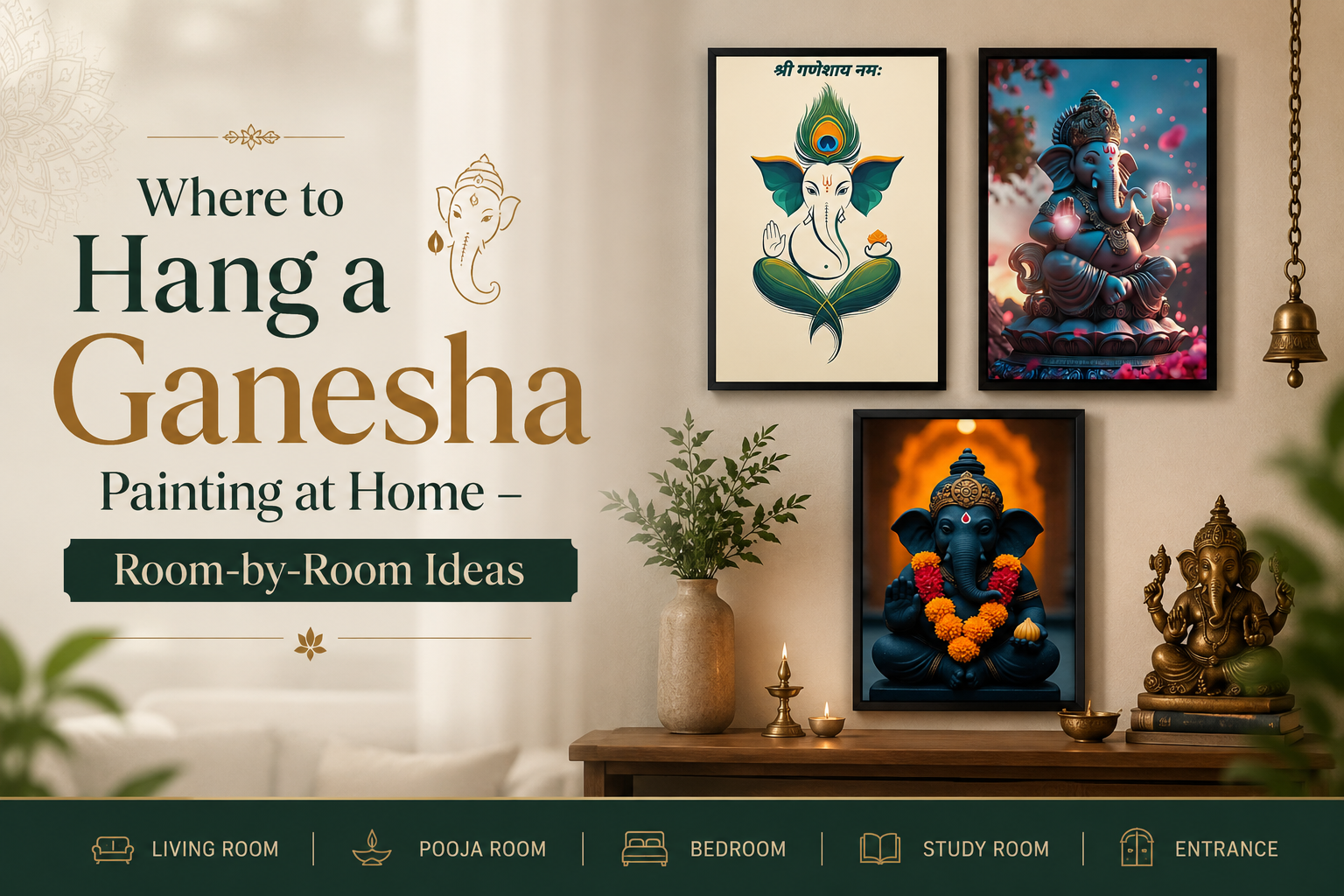
Where to Hang a Ganesha Painting at Home - Room-by-Room Ideas
The best place to hang a Lord Ganesh painting is on the north or east-facing wall, ideally at the main entrance, living room, or pooja room, with the trunk facing left for peace and harmony. Avoid bedrooms, bathrooms, and staircases, and never place the painting facing the main door directly opposite it or below stairs.
If you're short on time, that one paragraph answers the core question. Below, we break it down room by room, explain the reasoning (Vastu logic, not superstition alone), and cover common mistakes people make when placing a Lord Ganesh painting at home.
Why Placement Matters for a Lord Ganesh Painting
Lord Ganesha is worshipped as the remover of obstacles and the deity of new beginnings. In Vastu Shastra, correct placement of his image is believed to influence the flow of positive energy through a home. Beyond tradition, there's also a practical design reason: a Ganesha painting works as a focal point, and where you place it affects how a room feels — calming near an entrance, grounding in a living room, or sacred in a pooja space.
This guide combines traditional Vastu guidance with practical interior design sense, so you get placement advice that's both spiritually sound and visually functional.
1. Main Entrance / Foyer
The entrance is the most popular spot for a Ganesha painting, and for good reason — Ganesha is traditionally placed at doorways as a guardian figure who welcomes positive energy and blocks negativity.
How to place it:
-
Hang the painting on the wall facing the entrance, or just inside, at eye level.
-
The trunk should ideally curve to the left (viewer's right), which is associated with a calmer, more auspicious energy for the home.
-
Avoid hanging it directly on the front door itself — a nearby wall works better.
Best for: Homes, apartments, and shops where you want an immediate welcoming impression.
2. Living Room
The living room is where family and guests spend the most time, making it a natural home for a larger, statement Lord Ganesh painting.
How to place it:
-
North or east walls are considered most favorable.
-
Position the painting so it isn't directly facing the main door in a straight line — a diagonal or side wall placement works better.
-
Choose a size proportionate to the wall; a large canvas above a console table or sofa works well as a centerpiece.
Best for: Open-plan homes, family lounges, and formal sitting areas where the painting can be admired daily.
3. Pooja Room / Prayer Area
This is the most spiritually significant placement. In a dedicated pooja room, the Ganesha painting is often placed alongside idols or other deity images.
How to place it:
-
Place on the east or north wall so the household faces east or north while praying.
-
Keep the painting at a height where it can be viewed comfortably while seated or standing for prayer — not too high on the wall.
-
Avoid placing it directly above or below a storage unit; keep the surrounding space clean and clutter-free.
Best for: Homes with a dedicated puja corner or mandir room.
4. Home Office / Study
A Ganesha painting in a workspace is associated with clarity of thought and removal of obstacles in career or business — a popular choice for entrepreneurs and students alike.
How to place it:
-
Hang it on the wall facing your desk, so it's in view while you work, rather than behind you.
-
North-east corners of a study are considered favorable for focus and decision-making.
-
A smaller, subtle piece works better here than an oversized canvas, to avoid visual clutter.
Best for: Home offices, study rooms, and workspaces used for business planning.
5. Dining Room
Placing Ganesha art near the dining area is thought to bring abundance and gratitude into daily meals.
How to place it:
-
A side wall near the dining table works better than directly above the table.
-
Keep it at a height that doesn't interfere with light fixtures or shelving.
Best for: Open kitchen-dining layouts and homes that host guests for meals often.
Rooms and Spots to Avoid
Not every wall is a good fit for a Lord Ganesh painting. According to Vastu guidance, it's best to avoid:
-
Bedrooms — Considered too personal/rest-oriented a space for a deity's image.
-
Bathrooms and areas near the bathroom wall — Seen as impure zones in Vastu.
-
Under the staircase — This spot is generally avoided for any sacred imagery.
-
Directly opposite the main door in a straight line — Believed to let energy flow straight out rather than settle in the home.
-
South-facing walls — Considered less favorable than north or east walls for placement.
Quick Placement Checklist
-
Wall faces north or east
-
Trunk curves to the left (viewer's right)
-
Not directly opposite the main entrance
-
Not in a bedroom, bathroom, or under a staircase
-
Hung at eye level or comfortable viewing height
-
Surrounding wall/area kept clean and uncluttered
Conclusion
A Lord Ganesh painting is more than a decorative choice — its placement carries meaning rooted in Vastu tradition and everyday practicality. Whether you're welcoming guests at the entrance, creating a focused workspace, or setting up a pooja corner, the right wall and direction can make the painting feel like a natural, intentional part of your home rather than an afterthought.
Looking for the right piece to complete your space? Explore premium canvas Ganesha wall art designed for Indian homes at Pillow Fights.
Frequently Asked Questions
Q: Which direction is best to hang a Lord Ganesh painting?
A: North or east-facing walls are generally considered the most auspicious directions for hanging a Ganesha painting, as they align with traditional Vastu principles for inviting positive energy.
Q: Should the elephant trunk face left or right?
A: A left-curving trunk (from the viewer's perspective, this is Ganesha's right) is usually preferred for home settings, as it's associated with a gentler, more calming energy. Right-curving trunk depictions are traditionally seen as more powerful and are often reserved for temples.
Q: Can I hang a Ganesha painting in the bedroom?
A: It's generally advised against. Bedrooms are considered a private, rest-focused space in Vastu, and sacred images are usually kept in more "active" or communal areas like the living room, entrance, or pooja room.
Q: Is it okay to hang the painting facing the main door?
A: A painting placed on a wall facing the entrance is fine, but avoid hanging it in a direct straight line exactly opposite the main door, as this is believed to let energy pass through without settling in the home.
Q: What size Ganesha painting works best for a living room?
A: This depends on wall size, but as a general rule, choose a canvas that's proportionate to the wall — large enough to be a focal point above a sofa or console, without overwhelming the room. Mid-to-large sizes work well as a statement piece.
Q: Does the height at which I hang the painting matter?
A: Yes — ideally, hang it at eye level or slightly above, so it can be viewed comfortably without straining the neck, especially in pooja rooms where it's viewed during prayer.