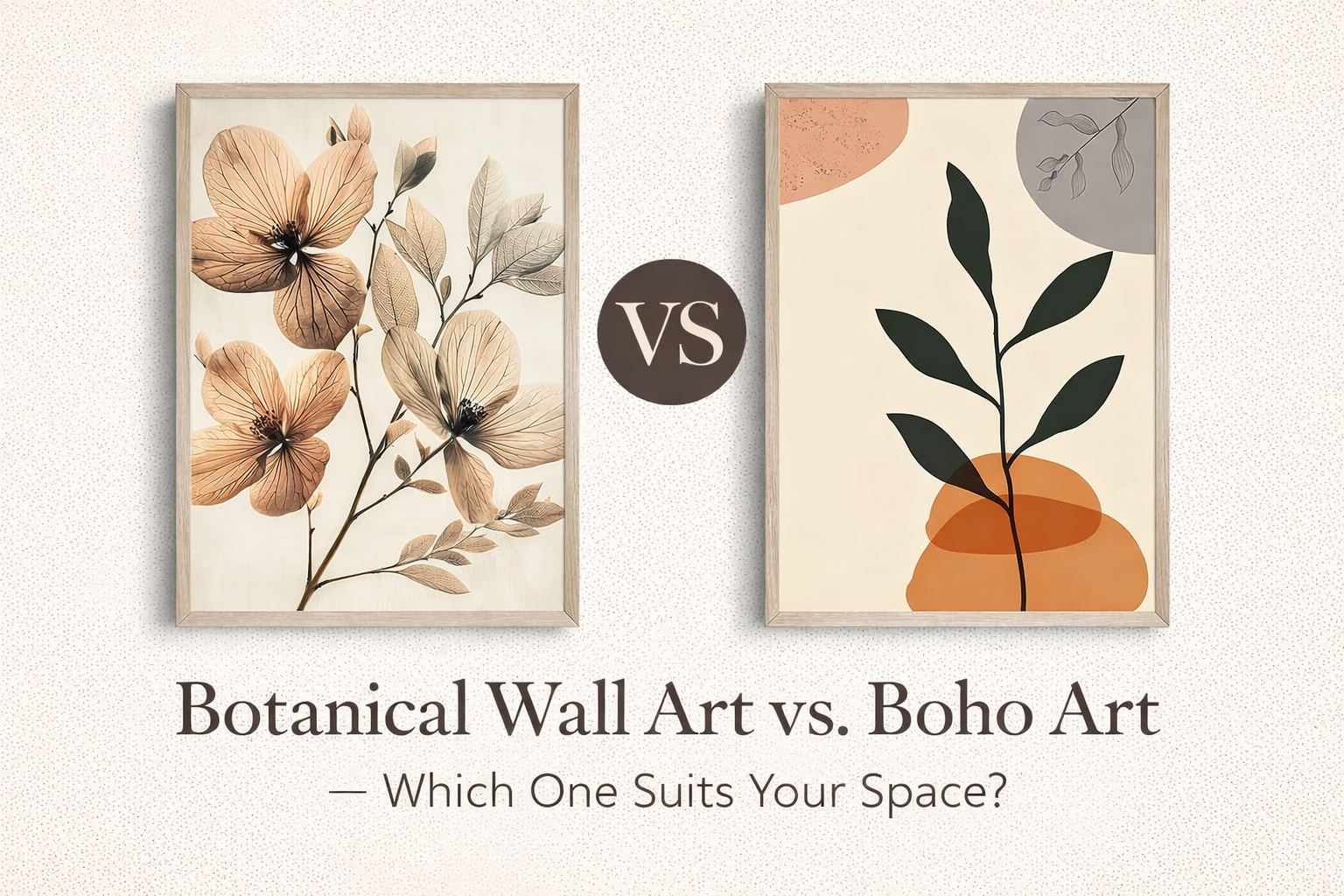


The Best Abstract Wall Art Colors for Each Room in Your Home
Choosing the right abstract wall art isn't just about picking something that "looks nice." Color psychology plays a powerful role in how each room feels, affecting your mood, energy levels, and even sleep quality. This expert guide breaks down the best abstract wall art color palettes, room by room, so every space in your home feels intentional and inspired.
Living Room
The living room is your home's social hub, a space that should feel welcoming, energetic, and conversation-worthy. Abstract wall art featuring warm terracotta, burnt sienna, or deep ochre tones can anchor the room with grounded energy. Pair these earthy hues with cool navy or slate blue accents for visual balance.
Large-scale abstract pieces with sweeping brushstrokes in warm amber and cream work beautifully above a sofa, drawing the eye and creating a natural focal point. If your living room has neutral walls, don't shy away from bold abstract art; a vibrant piece in rust, gold, and charcoal becomes the room's personality.
Bedroom
Your bedroom should be a sanctuary, calm, restorative, and deeply personal. Abstract wall art in soft, desaturated tones helps signal rest to your nervous system. Think muted lavender, sage green, blush pink, and misty grey, colors that feel like a deep breath.
Watercolor-style abstract pieces with gentle washes of color work especially well in bedrooms. Avoid overly busy compositions or high-contrast pieces above the bed, as these can subtly elevate alertness. Instead, opt for flowing, organic forms in cool and gentle warm tones.
Kitchen & Dining Room
Kitchens and dining spaces thrive on energy and appetite. Abstract wall art in warm yellows, fresh greens, and citrus oranges stimulates conversation and enhances the joy of eating together. These high-energy colors are known to increase appetite and social engagement, making them perfect for communal dining areas.
Consider geometric abstract art with bold yellow and white compositions, or loose expressionist pieces in coral and lime. Keep the scale proportionate; a medium-sized piece works well in most kitchens without overwhelming the functional aesthetic.
Home Office
A home office demands focus, clarity, and creative stimulation without distraction. Deep teal, rich indigo, and sophisticated charcoal abstract art pieces promote concentration and signal professionalism. These are colors associated with clarity of thought and steady productivity.
Abstract art with structured, architectural compositions in navy and white, or textured pieces in forest green and gold, strikes the right balance between inspiration and calm focus. Avoid overly chaotic or frenetic abstract pieces that can fragment attention during deep work.
Bathroom
Bathrooms benefit from abstract wall art that amplifies the sense of cleanliness, calm, and spa-like luxury. Cool aqua tones, seafoam greens, and soft whites work beautifully in this context, reinforcing the water-adjacent atmosphere. Even a small abstract print in a simple frame can transform a bathroom from functional to refined.
Go for minimal abstract compositions, think ink wash abstracts, monochromatic pieces, or subtle botanical-meets-abstract hybrids. These feel elegant without competing with the room's fixtures.
Pro Styling Tip
When selecting abstract wall art for any room, use the 60-30-10 rule: 60% dominant room color, 30% secondary tone, and 10% accent from your art. This creates a cohesive, professionally styled look without feeling matchy-matchy. Always view art in the room's natural lighting before committing, as colors shift dramatically between morning sun and evening lamp light.
How to Choose the Right Size & Finish
Beyond color, the finish of your abstract wall art matters. Canvas prints work well in living rooms and bedrooms for their warm, textured feel. Framed prints with glass are ideal for bathrooms and kitchens where humidity is a factor. Metal prints bring sleek, modern energy to home offices. Consider the room's light source, matte finishes reduce glare in bright rooms, while textured canvas adds depth in darker spaces.
Conclusion
The right abstract wall art does more than decorate; it shapes how you feel in every room of your home. By matching color psychology to each room's purpose, you create spaces that genuinely work for the people living in them. Whether you gravitate toward bold expressionist pieces or gentle watercolor abstracts, let the room's function guide your color choices and let your personality do the rest.
Frequently Asked Questions
Q1. What colors of abstract wall art work best for small rooms?
A: In small rooms, opt for abstract wall art in lighter, cooler tones, soft blues, muted greens, and pale neutrals. These colors recede visually and make walls feel farther away, creating a sense of spaciousness. Avoid very dark or heavily saturated pieces in tight spaces, as they can close a room in.
Q2. Can I use bold, colorful abstract wall art in a minimalist home?
A: Absolutely. In a minimalist interior, a single bold abstract piece becomes the intentional focal point, and it works even better because nothing is competing with it. The key is restraint: choose one statement piece and let it breathe with plenty of white space around it.
Q3. How do I match abstract wall art to my existing furniture colors?
A: You don't need a perfect match; you need harmony. Pull one or two accent colors from your furniture or soft furnishings and look for abstract art that features those tones, even subtly. A piece that echoes your cushion color or rug pattern will feel curated, not coincidental.
Q4. Is abstract wall art suitable for a child's bedroom?
A: Yes, and it's often a wonderful choice. Abstract art lets children engage their imagination without prescribing a specific narrative. Opt for playful, primary-colored geometric abstracts for younger children, and more sophisticated muted palettes for tweens and teens. Avoid overly dark or intense pieces in young children's rooms.
Q5. What's the difference between abstract art and modern wall art?
A: Abstract wall art refers specifically to non-representational work, art that doesn't depict recognizable subjects, instead expressing ideas through color, shape, and form. Modern wall art is a broader stylistic category that can include abstract work but also encompasses other contemporary styles like pop art, minimalism, and mid-century modern design.