

How to Style a Gallery Wall in a Modern Indian Home — A Room-by-Room Guide
Your walls have a story to tell — and a gallery wall is one of the most expressive ways to tell it. In modern Indian homes, where spaces often blend cultural warmth with contemporary aesthetics, a thoughtfully styled gallery wall can become the true centrepiece of any room. Whether you live in a compact Mumbai apartment or a spacious Delhi bungalow, the right wall art can completely transform how a space feels and functions.
This room-by-room guide will walk you through exactly how to curate, arrange, and style a gallery wall that feels intentional, beautiful, and unmistakably you.
What Is a Gallery Wall — and Why Does It Work So Well in Indian Homes?
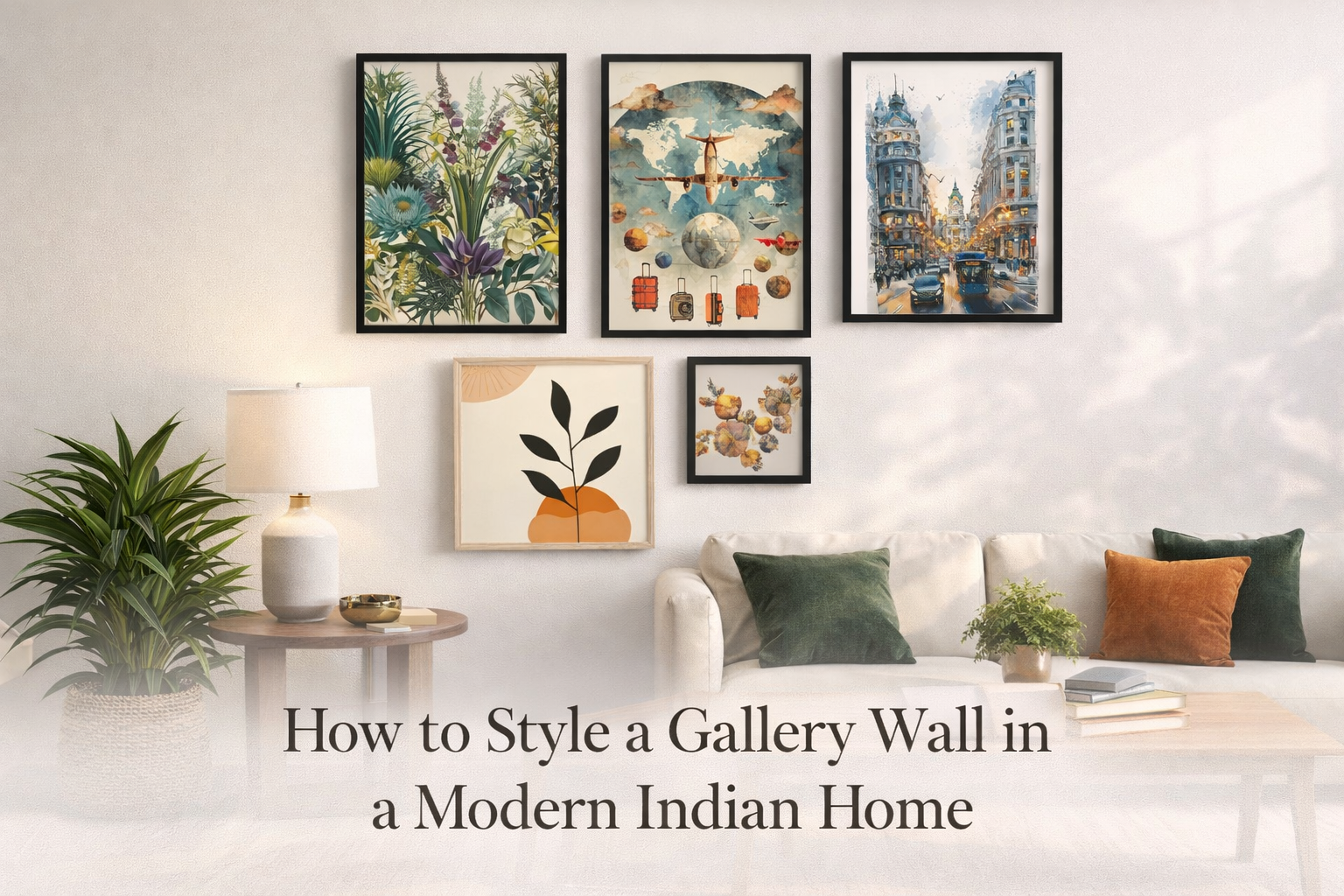
A gallery wall is a curated collection of artwork, prints, or decorative pieces arranged together on a single wall to create a cohesive visual display. Unlike a single statement piece, a gallery wall tells a layered story — mixing sizes, styles, and subjects to reflect personality and taste.
Indian homes, by nature, are rich in colour, texture, and emotional depth. Modern Indian interiors increasingly balance this heritage with clean lines and minimalist furniture — making gallery walls a perfect bridge between the two. The right mix of wall art grounds the room without overwhelming it.
Room-by-Room Gallery Wall Styling Guide
1. The Living Room — Make a Bold Statement
The living room is where first impressions are made. This is your opportunity to go big and confident.
Best approach: Choose a large anchor piece — such as a striking abstract art print or a dramatic cityscape — and build outward from it. Frame it with smaller complementary prints in coordinated tones. In Indian living rooms with terracotta walls or warm neutrals, deep indigo botanical prints or gold-toned landscape art create rich contrast.
Wall art to consider: Modern abstract art, night skyline paintings, and landscape paintings work beautifully here. Pillow Fights' collection includes bold botanical prints like Indigo Garden Majesty and Crimson Paradise Bloom that make an instant impression.
Pro tip: Keep your gallery wall at eye level — the centre of your arrangement should sit roughly 145–150 cm from the floor. In Indian homes with high ceilings, you have more vertical space to play with, so don't be afraid to stack pieces in two or three rows.
2. The Bedroom — Calm, Personal, and Layered
The bedroom calls for a more intimate and serene approach. Unlike the living room, this space is for rest, so your gallery wall should feel soothing rather than stimulating.
Best approach: Opt for a softer palette. Ivory, blush, sage, and dusty blue tones work well against white or pastel bedroom walls. Arrange three to five pieces of varying sizes in a loose horizontal band above your bed's headboard.
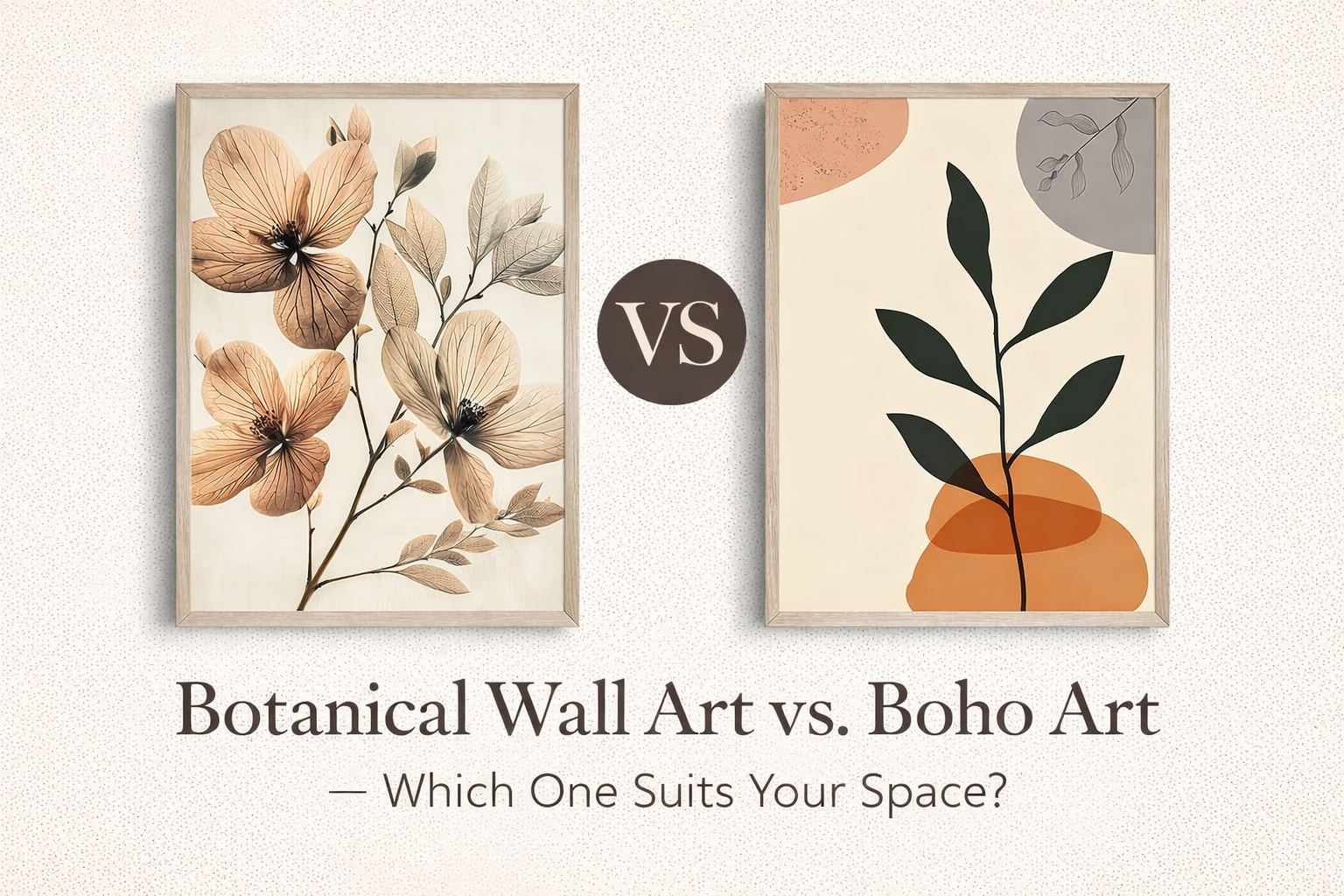
Wall art to consider: Botanical wall art is ideal here — pieces like Ivory Magnolia Bloom, Serene Blush Amaryllis, or Celestial Fern Harmony from Pillow Fights bring a gentle, organic quality to the bedroom that promotes calm and comfort.
Pro tip: Stick to a maximum of two to three colours across your entire arrangement to avoid visual noise. The bedroom gallery wall should feel like a soft exhale, not a shout.
3. The Dining Area — Warmth and Conversation
Dining spaces in Indian homes are deeply social — they're where chai is poured, stories are shared, and families gather. Your gallery wall here should feel warm, inviting, and a little playful.
Best approach: Food and bar art, travel prints, and street maps are perfect for dining areas. They spark conversation and give the room a lived-in, curated quality. Mix one or two larger prints with a few smaller ones for a casual, collected feel.
Wall art to consider: Pillow Fights' food and bar art collection pairs beautifully with wooden dining furniture common in Indian homes. City art prints of beloved Indian or global destinations also work wonderfully — a street map of Mumbai or a Grand Boulevard cityscape adds personality without overpowering the room.
Pro tip: If your dining area has a feature wall in a rich colour — a terracotta, forest green, or deep navy — go for lighter-toned prints to create contrast and visual breathing room.
4. The Study or Home Office — Inspiration on Demand
With more Indians working from home than ever before, the home office deserves thoughtful design attention. A well-chosen gallery wall here can boost focus and creative energy.
Best approach: Travel wall art and city art prints are particularly effective in workspaces — they evoke ambition, movement, and possibility. Keep the arrangement structured rather than free-form; symmetrical grids or clean horizontal rows feel more purposeful in a professional context.
Wall art to consider: Prints like Urban Escape Collage or moody landscape art give depth to a workspace without distraction. Monochrome or limited-palette pieces tend to work best in offices.
Pro tip: Avoid overcrowding your office gallery wall. Three to five well-spaced pieces at consistent intervals will feel far more intentional than a densely packed arrangement.
5. The Pooja Room or Entryway — Set the Tone
The entryway is the very first thing guests see — and in Indian homes, it often doubles as a transitional spiritual space. Here, your wall art choice carries real meaning.
Best approach: Go for pieces that are grounding and welcoming. Botanical wall art with earthy tones, mandala-inspired prints, or Boho wall decor work well. Keep the arrangement simple — one to three pieces is usually enough. The entryway shouldn't feel cluttered; it should feel like a deep, welcoming breath.
Wall art to consider: Amber Harvest Blooms or Golden Daffodil Heritage from Pillow Fights' botanical range bring warmth and a sense of abundance to entryways.
General Rules for Styling Any Gallery Wall
Regardless of which room you're decorating, these principles apply universally:
- Plan before you hang. Lay your pieces on the floor and experiment with arrangements before putting a single nail in the wall. Photograph your layout from above to review it objectively.
- Create visual unity. Cohesion doesn't mean matching — it means choosing a common thread. This could be a consistent frame colour, a shared colour palette within the prints, or a unifying theme like botanicals or travel.
- Mix sizes with intention. Pair at least one large anchor piece with medium and small supporting prints. Avoid using all the same size — it makes a gallery wall feel flat and predictable.
- Mind the spacing. Consistent gaps between pieces (typically 5–8 cm) give a gallery wall a polished, curated look. Irregular spacing can work beautifully too, but it requires a more confident eye.
- Invest in quality prints. High-resolution, premium prints with vibrant, fade-resistant inks make a dramatic difference over time. Pillow Fights' wall art collection is built with exactly this standard in mind.
Conclusion
A gallery wall is not just decoration — it's a declaration of how you live and what you love. In modern Indian homes, where every room carries emotion and meaning, the right collection of wall art can make the difference between a house that simply looks good and a home that truly feels like yours.
Explore Pillow Fights' full wall art collection — from abstract art and botanical prints to travel wall decor and city art — and start building your gallery wall story today.
FAQs: Styling a Gallery Wall in an Indian Home
Q1. How many pieces should a gallery wall have?
A: There's no fixed rule, but three to seven pieces is a good starting range for most rooms. Smaller spaces like bedrooms or entryways work well with three to five pieces, while larger living room walls can comfortably hold seven or more when arranged thoughtfully.
Q2. What kind of wall art works best for Indian home interiors?
A: Indian interiors respond beautifully to botanical wall art, abstract art with warm or jewel tones, and travel or city art. The key is choosing prints that complement your existing wall colour and furniture palette. Earthy, terracotta, and jewel-toned wall art tends to harmonise well with the rich textures common in Indian homes.
Q3. Can I mix different frame styles in a gallery wall?
A: Yes — mixing frames adds personality and a collected-over-time feel. The trick is to keep one consistent element, such as frame colour (all black, all natural wood, or all white), so the overall display still feels unified.