

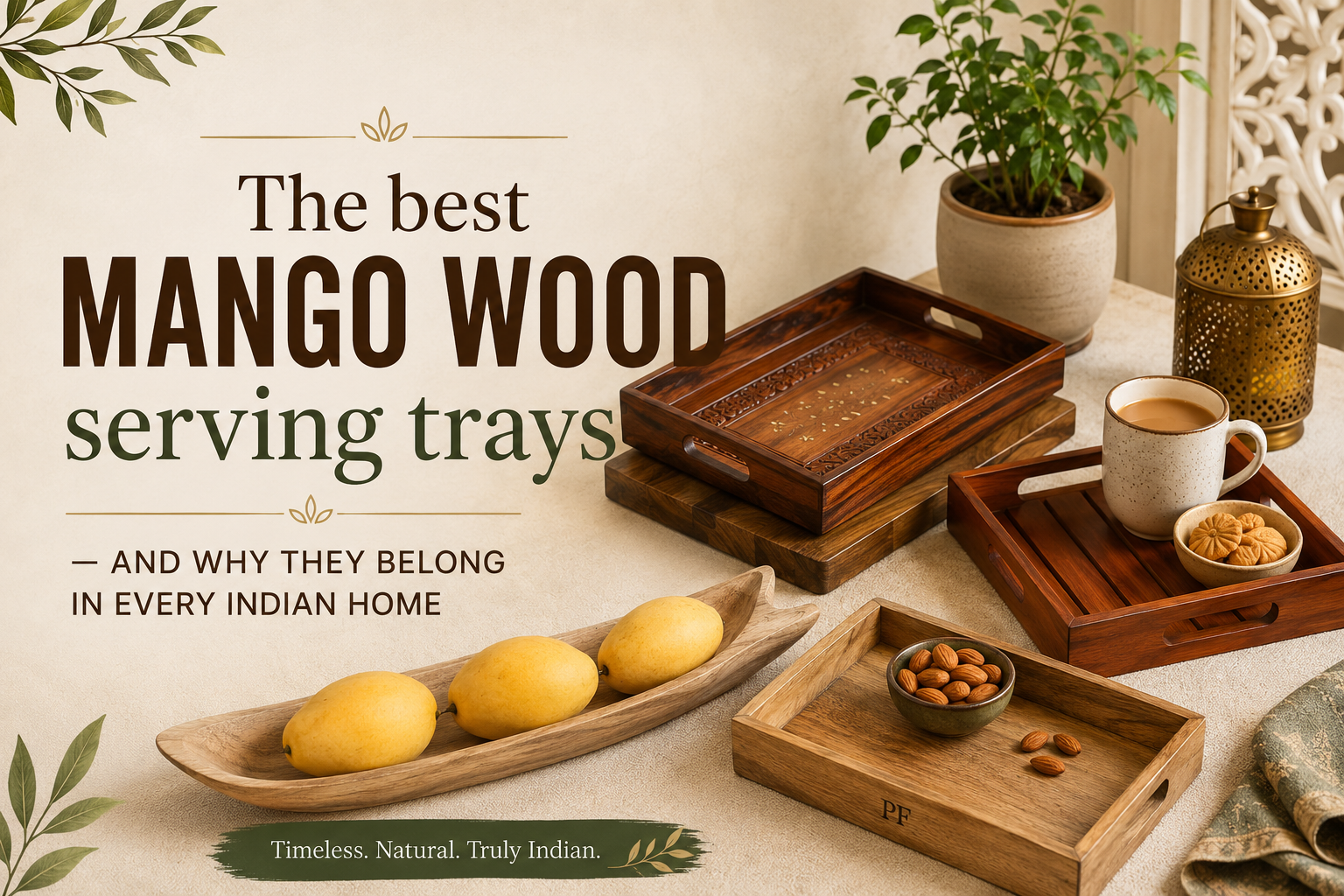
The best mango wood serving trays — and why they belong in every Indian home
A tray is never just a tray. It's where the morning chai lives, where guests feel welcomed, where everyday rituals find their form.
At Pillow Fights, we believe the objects in your home should carry meaning. And few materials carry meaning quite like mango wood — warm-grained, sustainably grown, and deeply rooted in the Indian subcontinent. This guide walks you through everything: why mango wood stands apart, which trays we recommend, how to style them, and how to care for them so they last a lifetime.
Why mango wood?
Mango wood is one of India's most thoughtfully harvested materials. Mango trees are replanted after each harvest cycle, making the wood inherently more sustainable than most alternatives. Beyond its eco-credentials, mango wood has a distinctly characterful grain — each piece carries its own map of rings, streaks, and natural colour shifts that make no two trays truly identical.
It's also naturally hard and dense, which means it resists warping and scratching far better than softer woods. A well-made mango wood tray can outlast kitchenware that costs three times more.
Mango vs. acacia vs. sheesham
All three are popular in Indian home décor — here's how they compare:-
Mango wood: Warm honey tones, visible grain, eco-friendly harvesting. Best for everyday serving and gifting.
-
Acacia wood: Harder and denser. Rich dark streaks. Better knife-friendly surface for charcuterie boards.
-
Sheesham wood: Dark rosewood tones, ornate and carved beautifully. Great for decorative or festive trays.
For most homes, mango wood hits the sweet spot: warm, durable, food-safe, and versatile enough for both serving and styling.
Top picks from Pillow Fights
Every tray here is handcrafted by Indian artisans — real products, real prices, with links to shop directly.


Hand-Carved Sheesham Tray with Inlay Work
A masterpiece of functional art. Hand-carved floral border, premium sheesham rosewood, and integrated handles. Ideal for Diwali, festive serving, and gifting.
Shop Now
Mango Wood Tray with Brass Leaf Handles & Star Cutouts
Solid mango wood meets ornate brass leaf handles and star-cutout rim details. A festive centrepiece for Diwali, weddings, or gifting - rustic charm with modern elegance.
Shop Now
Artistic Hand-Carved Mango Wood Fish Platter
A fish-shaped platter carved from eco-friendly mango wood. Perfect for appetisers, sushi, or crackers doubles as coastal wall art or a décor piece for the console.
Shop NowHow to style your tray at home
A wooden tray is one of the most versatile styling tools in a home. Here are four ways to use it:
-
Morning ritual: Chai cups, a small milk jug, and a plate of biscuits — the tray turns a daily habit into a ritual.
-
Coffee table centrepiece: Group a candle, a tiny vase, and a decorative object on the tray for an instant curated look.
-
Festive hosting spread: Use the brass-handle mango tray as a mithai or dry fruit base for guests during Diwali or Navratri.
-
Entry or dresser organiser: Keys, wallet, phone — a compact tray near the door brings order and warmth to a functional space.
Caring for your wood tray
A little care goes a long way. Follow these steps to keep your tray beautiful for years:
-
Wipe with a soft, damp cloth after use. Never soak or leave water sitting on the surface.
-
Avoid the dishwasher entirely — high heat and prolonged moisture cause warping and cracking.
-
Every few months, apply a food-safe mineral oil and buff with a soft cloth to restore natural lustre.
-
For the brass-handle tray, polish the brass handles occasionally to maintain their golden sheen.
With the right care, a quality wood tray doesn't just last — it ages beautifully, developing a patina that makes it uniquely yours.
Explore the full collection
All trays are handcrafted in India, food-safe, and shipped across the country. Free shipping available.
Shop wooden trays at Pillow Fights →
FAQs
Q1. Is mango wood safe for food use?
A: Yes. Mango wood is naturally food-safe and doesn't require any chemical treatment to be usable in the kitchen. Most trays are finished with a food-grade oil or lacquer, so always check the product description for the specific finish used.
Q2. Is mango wood durable enough for daily use?
A: Yes — mango wood is dense and naturally resistant to warping and scratching, which is why it holds up well to daily serving, unlike softer woods that dent easily.
Q3. How is mango wood different from acacia or sheesham?
A: Mango wood offers a warmer, honey-toned grain and is the most sustainable of the three, since the trees are replanted after each harvest. Acacia is harder and better suited to knife use (like charcuterie boards), while sheesham leans darker and more ornate — ideal for decorative or festive pieces.
Q4. Can I put my mango wood tray in the dishwasher?
A: No. Dishwashers expose wood to prolonged heat and moisture, which causes warping and cracking over time. Stick to wiping with a soft, damp cloth.
Q5. How often should I oil my tray?
A: Every few months, or whenever the surface starts to look dry or dull. A food-safe mineral oil, buffed in with a soft cloth, restores the natural lustre.